
Weighing yourself on a GLP-1
NHS England suggests regular weigh-ins at the same time of day, preferably in the morning, at weekly to monthly intervals. This is general guidance; your healthcare team can advise on a routine for Mounjaro or Wegovy.
A consistent weigh-in
NHS England describes these checks for more consistent readings.
The same scales
NHS England recommends the same scales in the same location each time, on a firm, level floor for accurate readings.
Similar clothing
Its leaflet suggests little or no clothing, with similar items each time, avoiding shoes and heavy items where possible.
Both feet on the scales
The leaflet says to stand with both feet on the scales and your weight evenly distributed; analogue scales start at zero.
A settled reading
NHS England says to keep still on the scales until the number has stopped moving, then record the weight that is shown.
What the numbers can tell you
The NHS describes weight and BMI as parts of weight management. Its advice also recognises the limits of a BMI result.
- A record over timeThe NHS recommends realistic goals and regular weighing to check how things are going. It also says changing habits and losing weight takes time.
- BMI has limitsThe NHS says BMI cannot distinguish muscle from fat. Someone with a lot of muscle may be placed in a higher BMI category despite not having much body fat.
- Waist measurementsFor adults with a BMI below 35, the NHS says waist-to-height ratio can help assess whether they carry too much fat around their tummy.
- Support with your goalsThe NHS says a GP can advise on losing weight safely and refer you for treatment. They can also help with conditions that may affect your weight.
Questions
Do I need to weigh myself every day?
NHS England’s general leaflet suggests weekly to monthly intervals. Your healthcare team can advise if your care needs a different routine.
What if I do not have scales at home?
NHS England says health centres and pharmacies are likely to have private weighing areas. Gyms and leisure centres often have scales, sometimes for a fee.
Does a BMI result decide my treatment?
BMI is one part of the picture. The NHS says access to weight-loss medicines can depend on BMI and other health conditions affected by weight. Your prescriber makes decisions about your treatment.
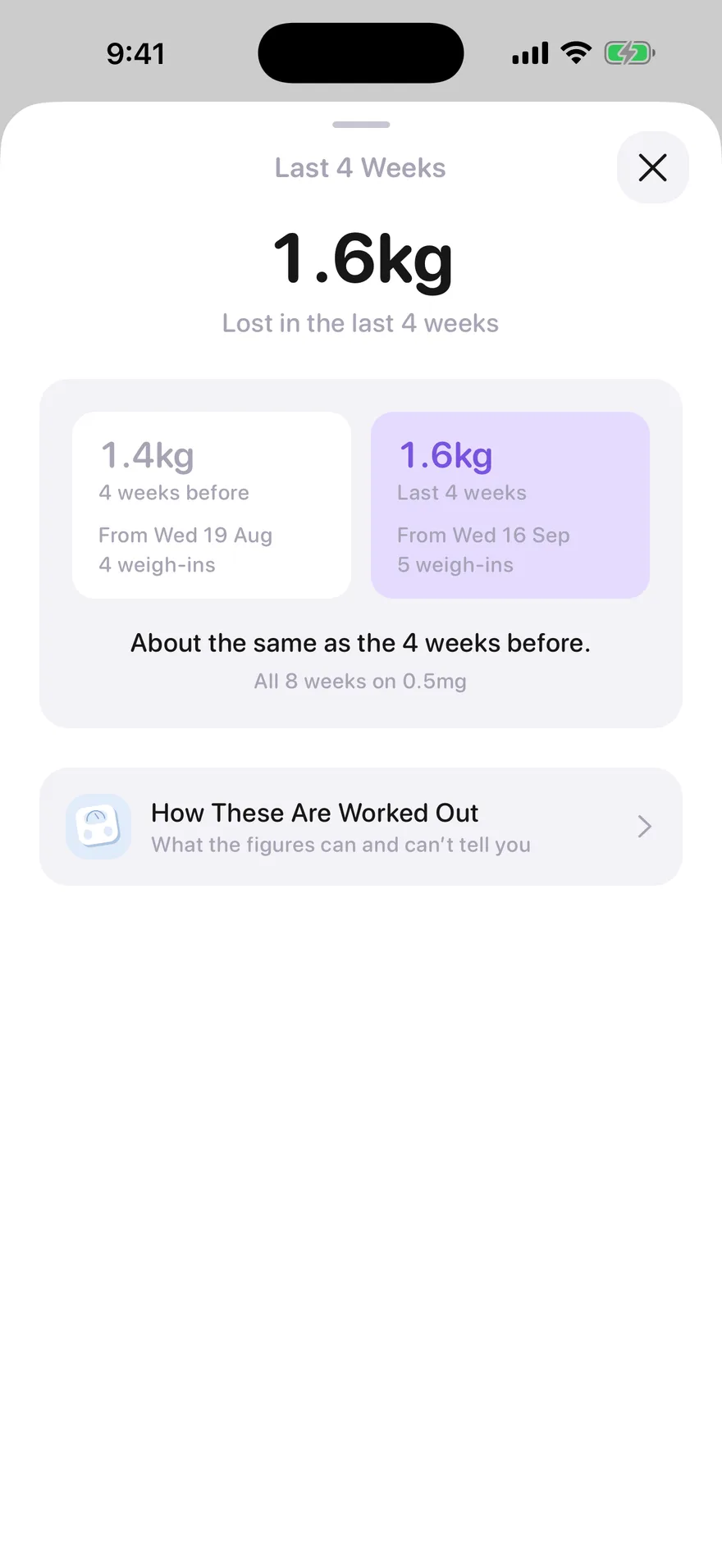
Last 4 weeks
Your month beside the last.
Jabwise puts your latest 4 weeks of weight beside the 4 before them, with the number of weigh-ins behind each figure. It gives you a record to discuss with your healthcare team.
Sources
Published by Under Cntrl, the maker of Jabwise. For corrections, contact us.
General information, not medical advice. Follow your prescriber’s guidance.
Getting real advice
We’re not doctors. This page sums up official health and medicine guidance, and can’t tell you what’s right for your body: your prescriber’s instructions and the leaflet in your box come first. More in our terms.
- Checked against official sources, each one linked
- Sources checked 20 October 2026
- No dosing advice; your prescriber comes first
- A pharmacist, your doctor or NHS 111If you’re not sure how to use your medicine, or a side effect bothers you or won’t go away. NHS 111 if you think you might be having serious side effects, or you’ve used too much.NHS: SemaglutideNHS: TirzepatideNHS 111 online
- Report a side effectAnyone can, not only doctors.Yellow Card (UK)MedWatch (US)